
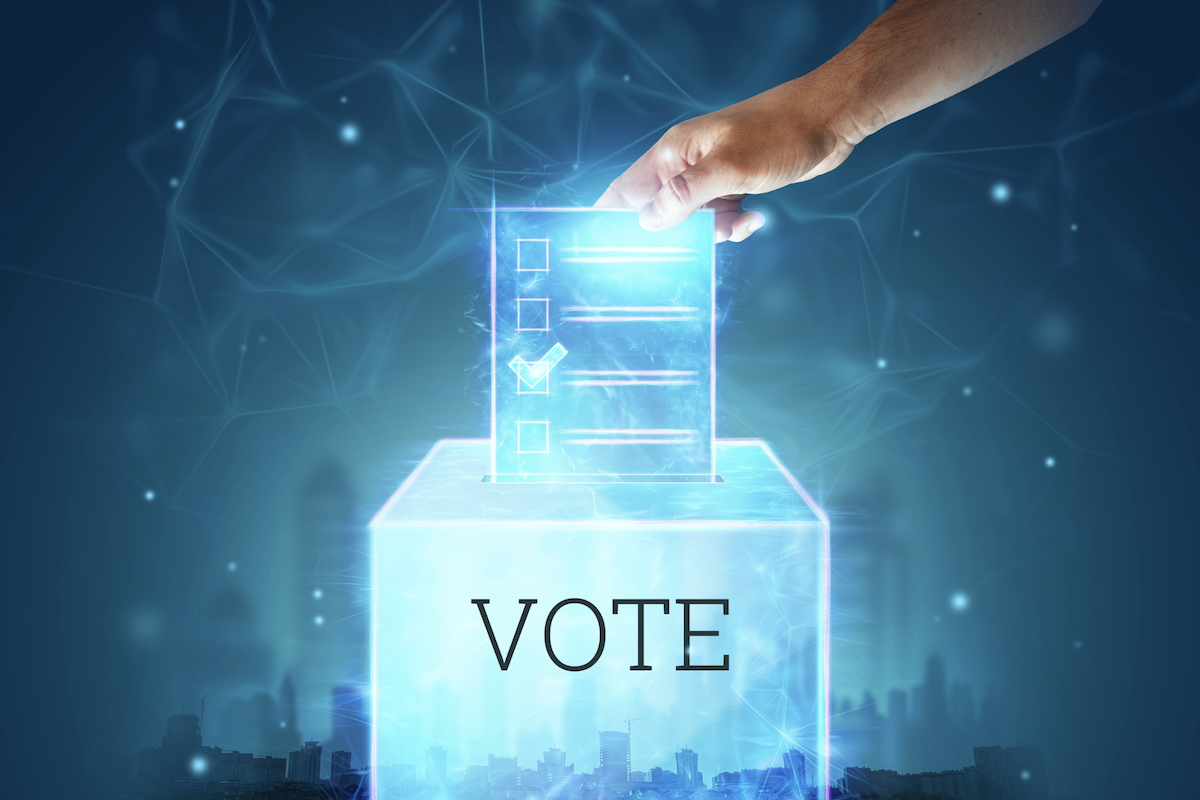
Could blockchain technology change how we vote? With its potential to improve transparency, security, and efficiency, blockchain voting is sparking global interest and debate. But like any new technology, it comes with challenges, leaving many wondering if it’s the right solution for modern democracy.
Why Blockchain Voting Could Work
There’s a lot to like about blockchain voting. It creates a digital ledger that’s virtually tamper-proof. Every vote is recorded securely and accurately, reducing the risk of fraud. Proponents say this will restore trust in elections, especially in places where people don’t trust the results.
Transparency is one of blockchain’s biggest selling points. Because everything happens on a decentralized system, voters can track the process in real-time. In Romania’s 2024 presidential elections, blockchain technology is letting citizens do just that. For the first time, people can follow the vote count live, knowing every ballot was verified by secure systems.
Another big benefit is accessibility. Voting can be hard for people who can’t get to polling stations—whether it’s because of mobility issues, remote locations, or scheduling conflicts. Blockchain makes online voting possible, letting people cast their votes from home.
And then there’s cost. By eliminating physical infrastructure like polling stations and paper ballots, blockchain can save money and speed up results. It’s a win-win for voters and election officials.
For example, Switzerland tested blockchain voting in a proof-of-concept e-vote in Zug, where 72 digital ID holders voted in an online consultative vote in 2018. The test was a success, met most of the technical requirements and provided valuable insights for future decentralized voting solutions.
The Roadblocks
For all its virtues, blockchain voting isn’t without its flaws. Security is still a big issue. While blockchain itself is hard to hack, the process isn’t foolproof. Votes can be manipulated before they even get to the blockchain, and the system is vulnerable to cyber-attacks.
Another challenge is to let voters verify their ballots without giving up their privacy. People need to know their vote is counted, but they also need to feel that no one else can see how they vote. Furthermore, most governments would be unlikely to accept the risk of a voter losing their right to vote due to a damaged hard drive or losing their digital keys.
Going to blockchain voting won’t be cheap either. Countries would need to invest in new infrastructure, train election officials and educate the public about how it works. It’s a big ask, especially for countries that are already struggling with their current systems.
Romania Leading the Way
Romania is showing that blockchain voting isn’t just an idea—it’s already happening. In the 2024 presidential elections, Romania is implementing blockchain for the monitoring and counting of votes. Citizens can see the results in real-time thanks to a system that uses complex codes to verify each ballot.
Romania’s blockchain system is connected to the European Blockchain Services Infrastructure, as well as other European countries. This is how blockchain can scale for international use and create a more unified and transparent voting system.
Romania’s blockchain voting system wasn’t just about transparency. It also connects to the European Blockchain Services Infrastructure (EBSI), a network of 27 countries. This is how blockchain can work across borders, making voting systems more harmonized and efficient.
Romania started its blockchain journey earlier in the 2020 parliamentary elections. Back then, the technology was used to provide tamper-proof data on voter turnout and streamline post-election reporting. The results were encouraging, showing how blockchain can simplify election management and increase public trust.

Could Soulbound NFTs Be the Answer?
A newer idea is the use of Soulbound NFTs (SBTs) in elections. These unique, non-transferable digital tokens could change how voter identities are verified.
Here’s how it could work: voters receive an SBT as a digital ID once their eligibility is confirmed. This ID can be tied to secure authentication methods like biometric data so only authorized individuals can vote. SBTs can even track if someone has already voted, so no double voting.
SBTs can also make voting more accessible. As digital keys, they can allow people to vote online securely from anywhere. Imagine the turnout if people didn’t have to leave their homes to have their say.
Of course, this is all speculative for now. SBTs would need to address the same issues as blockchain—like privacy, security and cost. However, the idea shows how blockchain and related tech can evolve to make voting more inclusive and secure.
A Glimpse Into the Future
Blockchain voting has potential, from making elections more transparent to increasing accessibility. Countries like Romania are showing what’s possible when technology meets governance.
But the challenges are real. Security risks, high costs, and public scepticism remain major obstacles. And while concepts like Soulbound NFTs add possibilities, they’re still in the early stages.
The road ahead will require careful planning, rigorous testing, and trust from voters. If blockchain can rise to these challenges, it might just redefine how we vote.
Editor’s note: Written with the assistance of AI – Edited and fact-checked by Jason Newey.

Credit: Source link